
The bliq team
From advice to action
Booking the table, ordering the gift, tracking the flight — and the rule that anything spending your money or speaking in your name stops and asks first.
The things you only said once are the things worth keeping. A look at what bliq stores, why it stores so little, and how to see and delete any of it.
The bliq team
bliq

The single most tiring thing about talking to a computer is that it does not remember you talked to it.
You explain that Clara is your sister. Tomorrow you explain it again. You mention you do not eat meat and it recommends a steakhouse the following week. Every conversation begins with a paragraph of context you have already typed twenty times, and after a while you stop bothering and just do the thing yourself.
So the first real problem we had to solve was not intelligence. It was memory.
The instinct is to store everything. It is the wrong instinct — a system that remembers every word is functionally the same as one that remembers nothing, because the useful line is buried under ten thousand useless ones.
What is worth keeping is small and specific:
Almost all of it arrives once, in passing, in the middle of a sentence about something else. "I can't do Thursday, that's the dentist." That is the whole mechanism — you were not filing a fact, you were just talking.
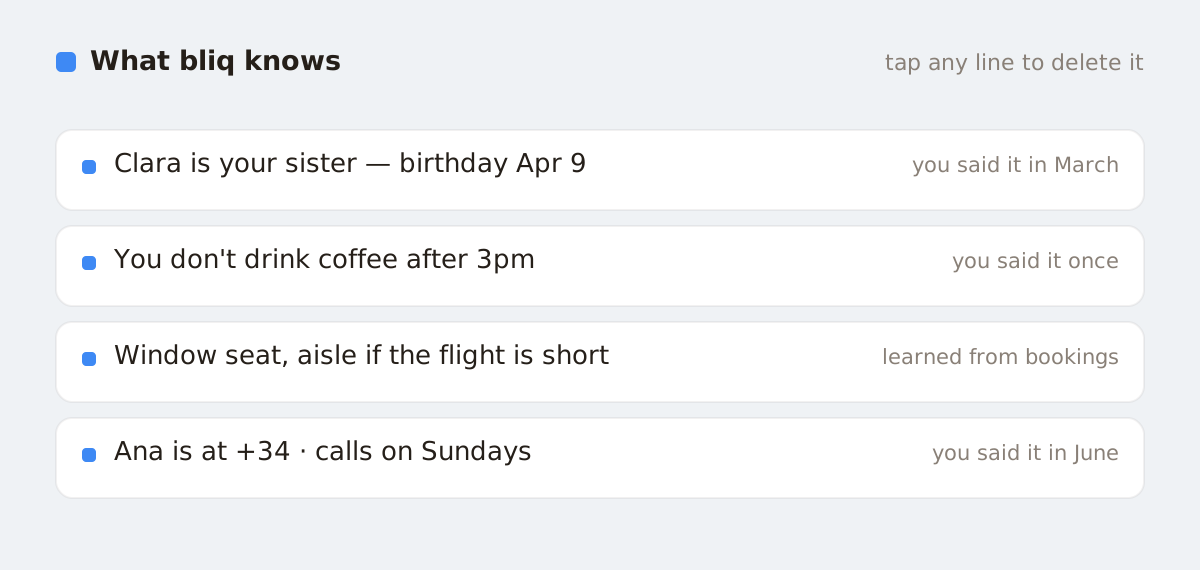
There is a list. It is the actual memory — not a summary of it, not a friendly rendering of it. Everything bliq knows about you is a line on that list, and each line says where it came from.
That matters for two reasons.
Memory picked up from conversation will sometimes be wrong. You said something sarcastically. You changed your mind in April. Somebody else was using your phone.
If the only way to fix a wrong fact is to argue with a chatbot about it, the wrong fact stays forever. So it is a list, and you delete the line, and it is gone.
An assistant that quietly accumulates a model of you that you cannot inspect is not something we would want to use, regardless of how well it worked. "It just knows" is not a feature, it is an unexamined liability.
If you cannot see what it knows, you cannot know what it does not know.
A few things we decided against, and have kept deciding against:
The longer version of all four is in our privacy policy, and we tried hard to write it in sentences rather than clauses.
Everything else bliq does depends on this part working.
It cannot text you first if it does not know that the 9th matters. It cannot book the table if it does not know there are four of you and one does not eat fish. Proactivity and action are both just memory, applied.
Get the memory right and the rest is mostly follow-through. Get it wrong and you have built another chat window.
Let bliq handle the rest.
It knows you, checks in on you, and quietly gets the small things done. On iPhone today.
Keep reading